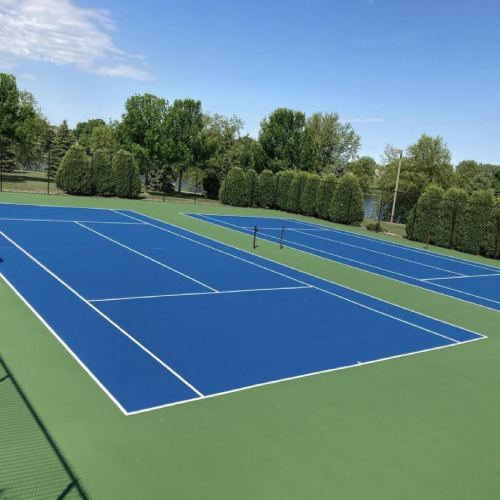
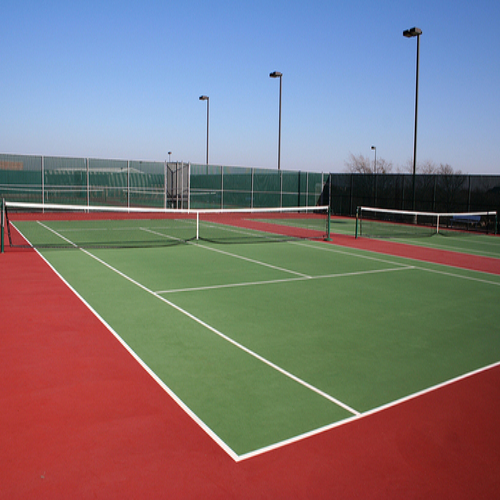
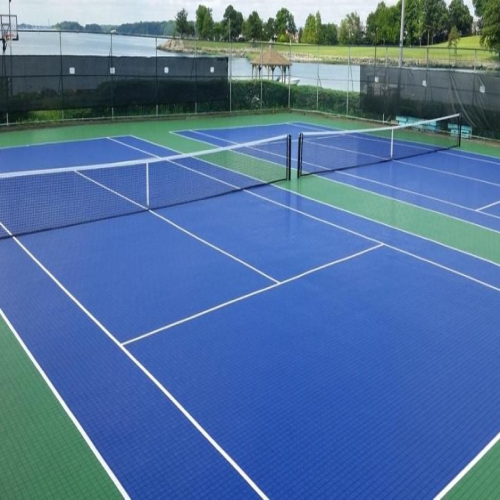
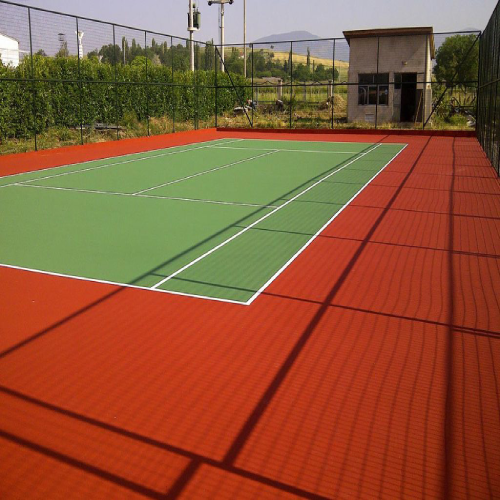
Tennis court flooring is very important because it directly affects ball bounce, speed of game, and player safety. Different surfaces are used based on location (indoor/outdoor), budget, and playing level.
✔ Used in major tournaments like US Open and Australian Open
👉 Best for: Schools, academies, outdoor courts
✔ Durable and long-lasting (10–15 years with maintenance)
✔ Works well in Indian weather (heat, rain, UV)
✔ Used in French Open
👉 Best for: Professional & training players
✔ Reduces joint stress
❌ High maintenance (watering, rolling)
👉 Best for: Clubs, resorts, recreational use
✔ Low maintenance
✔ Comfortable for knees
👉 Best for: Indoor tennis courts
✔ High durability & player comfort
✔ Usually 5–12 layers system
✔ Anti-slip surface
✔ Consistent ball bounce
✔ Shock absorption (injury prevention)
✔ Weather resistance
✔ Long durability
👉 Flooring directly impacts performance and safety