📐 Key Field Measurements
- Goal Size: 3.66 m (width) × 2.14 m (height)
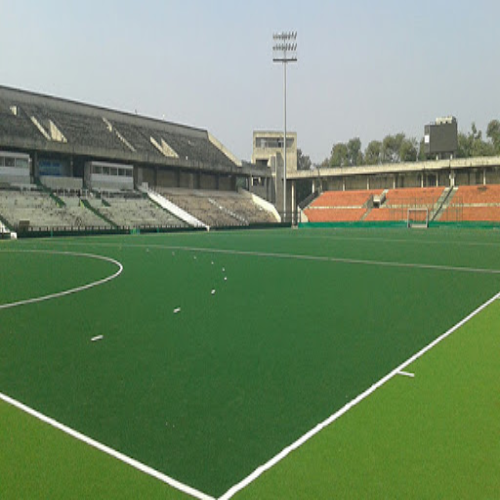
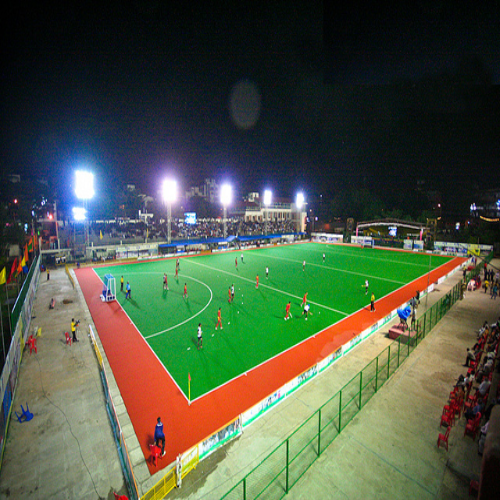
- Shooting Circle (D): 14.63 m radius from goal
- Penalty Spot: 6.4 m from goal
- 23 Meter Line: Divides attacking area
- Center Line: Mid-field division
🧱 Types of Hockey Ground Surfaces
🌱 1️⃣ Natural Grass (Old Type)
- Traditional surface
✔ Low cost
❌ Uneven bounce & slower game
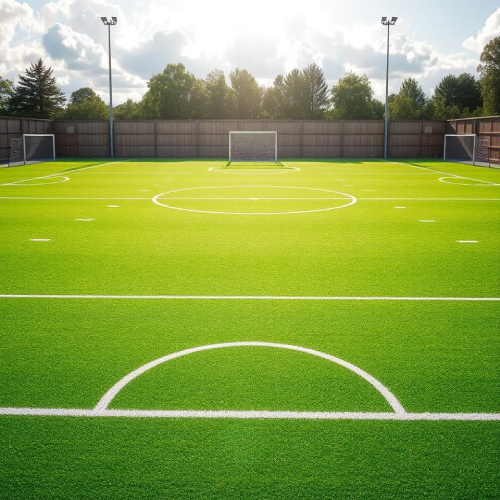
🟢 2️⃣ Artificial Turf (Modern Standard)
✔ Used in all international matches
✔ Fast gameplay & smooth ball movement
👉 Types of turf:
- Water-based turf (best quality)
- Sand-filled turf
- Sand-dressed turf
✔ Ensures consistent performance and safety
🧱 Hockey Turf Construction Layers
- Compacted soil base
- Stone/gravel sub-base
- Asphalt or concrete layer
- Shock pad (optional)
- Artificial turf carpet
- Sand/water system
✔ Proper drainage system is very important
📏 Space Requirement
- Field: 91.4 × 55 m
- With run-off area: ~100 × 60 m
✅ Key Features of Good Hockey Ground
✔ Smooth & even surface
✔ Fast ball movement
✔ Proper drainage system
✔ Shock absorption (player safety)
✔ Accurate line marking
🧠 Pro Tip
👉 Best modern setup:
Concrete/Asphalt base + Water-based artificial turf
✔ Used in Olympics & international tournaments
✔ Gives fastest and most accurate gameplay
🏁 Final Advice
- School / practice: Sand-filled turf
- Academy: Artificial turf (good quality)
- Professional stadium: Water-based turf