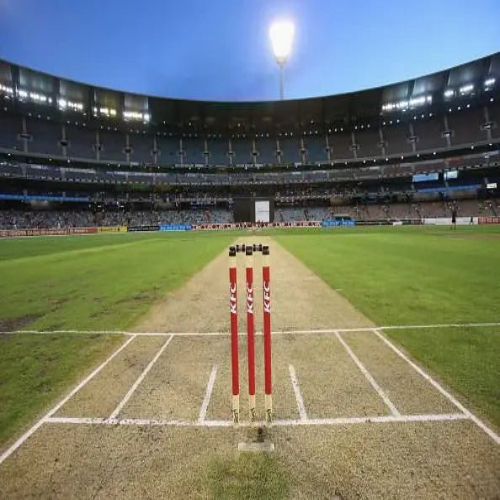
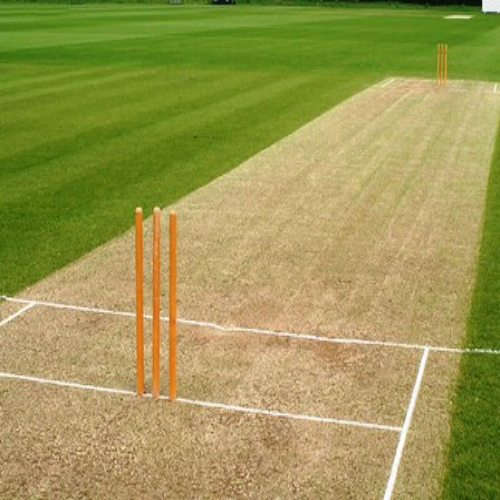
🧱 Cricket Pitch (Center Strip)
The pitch is the most important part of the ground.
📐 Pitch Dimensions
- Length: 22 yards (20.12 meters)
- Width: 3.05 meters
👉 This is standard for all formats (Test, ODI, T20)
📐 Important Pitch Markings
- Crease (Batting Line): Where batsman stands
- Bowling Crease: Bowler must not cross
- Popping Crease: Safe zone for batsman
- Return Crease: Bowler alignment
🧱 Types of Cricket Pitch
1️⃣ 🟫 Natural Turf Pitch
- Made of clay & grass
✔ Used in international matches
✔ Offers swing, spin & bounce
2️⃣ 🟩 Artificial / Matting Pitch
- Synthetic mat over concrete/soil
✔ Low maintenance
✔ Used in schools & local grounds
3️⃣ 🪨 Concrete Pitch
- Cement base with mat
✔ Very durable
❌ Hard surface
🧱 Pitch Construction Layers (Turf)
- Sub-base (soil)
- Clay layer (binding strength)
- Grass layer
- Rolling & compaction
✔ Requires regular watering & rolling
📐 Key Ground Areas
- Pitch (center)
- Inner circle (30-yard circle)
- Outfield (grass area)
- Boundary line